Health & Performance · Originally published 25 Feb 2020
Learnings from My 5 Day Water Fast, Data-Backed Analysis and Experience
A self-experiment on extended fasting, tracking body composition and blood markers before, during, and after a 113-hour fast.
This essay was originally published on Medium by Adrian Li on 25 February 2020. The original post included several charts and photos; this republication preserves the written analysis and key figure captions.
I have been an avid proponent of fasting since 2015 after reading Eat Stop Eat by Brad Pilon, and after three years of following this protocol on a weekly basis I was curious to try an extended fast. While the 24-hour fast was effective for weight loss, based on my reading some of the additional benefits of fasting such as cell regeneration, ketosis and immune system reset appeared to come only from extended fasting.
Why five days? As you will see below, over three days of fasting seems to be the trigger point for many of the aforementioned benefits.
What Is Fasting?
Fasting is simply the voluntary abstinence of food. It can last from several hours to many days. While there has recently been a lot of news covering intermittent fasting, fasting has a long history.
It has been practised by many religions in various formats since the dawn of society and it has also been used therapeutically by early doctors such as Hippocrates and Paracelsus, who wrote, "Fasting is the greatest remedy - the physician within." However, it has only been in recent years that medical researchers have started to review in depth the biological benefits of fasting.
What Happens When We Fast?
When we eat, our bodies produce the hormone insulin, which is needed for two key processes in the body. First, for cells to absorb glucose from eating for energy. Second, for excess energy from eating to be stored in the liver and then later as fat when liver stores are full. When we fast, this process is reversed. Insulin levels go down and our bodies start converting stored glycogen into glucose for our bodies to use.
Essentially the body goes through a series of states as described by George Cahill, one of the leading experts on fasting:
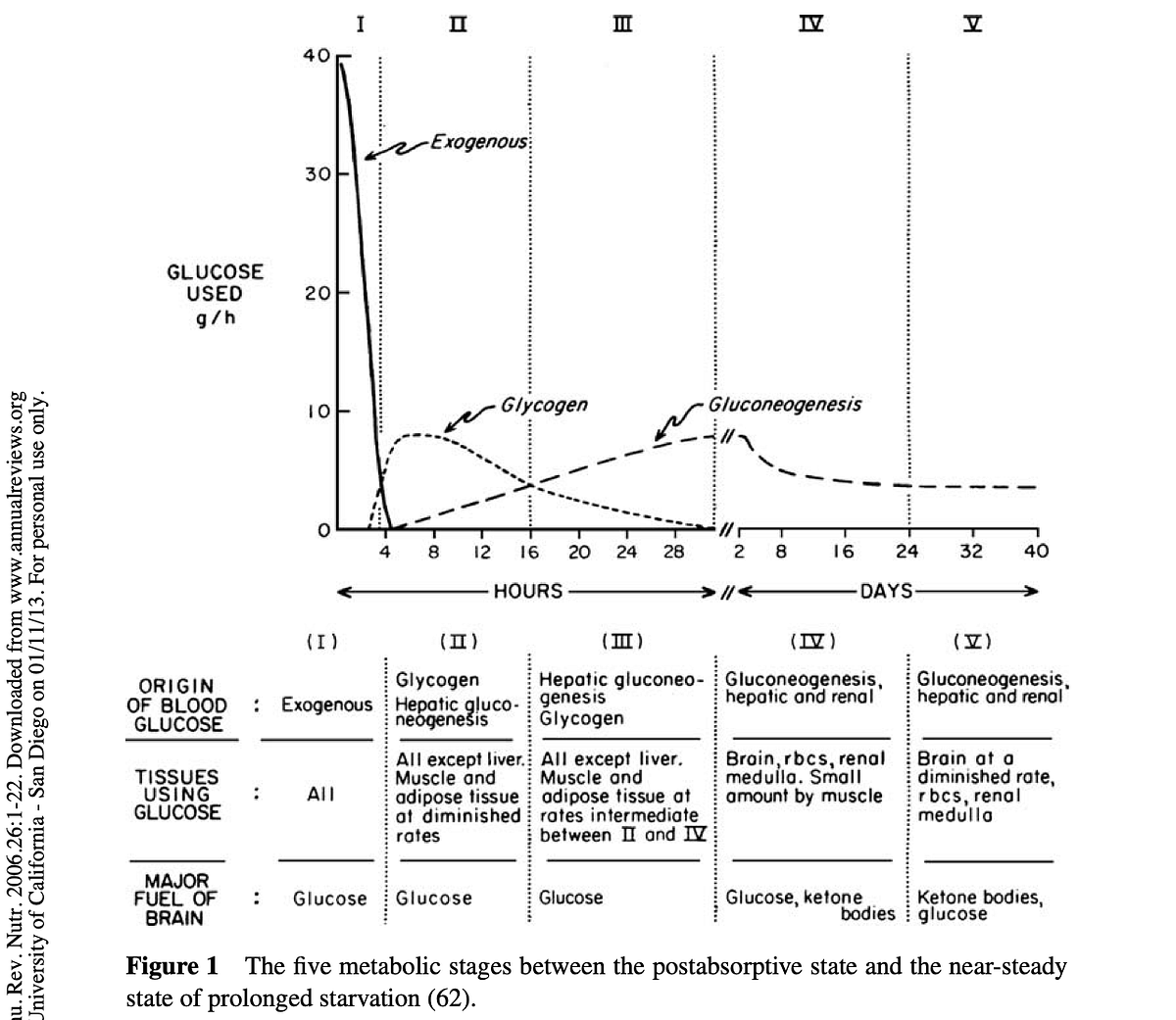
- Feeding: blood sugar rises as we absorb food. Insulin rises to move glucose into cells and excess is stored as glycogen in the liver or converted to fat.
- Postabsorptive phase, 6-24 hours after starting to fast: blood sugar and insulin levels fall. The body starts to burn glycogen and release glucose. Glycogen stores last about 24-36 hours.
- Gluconeogenesis, 24 hours to 2 days from the start of fasting: glycogen stores have run out. The liver now manufactures new glucose from amino acids.
- Ketosis, 2-3 days from starting to fast: low insulin levels stimulate lipolysis, the breakdown of fat for energy. Triglycerides are broken into their components, with glycerol used for gluconeogenesis and fatty acids used for energy by other parts of the body. The body also uses fatty acids to produce ketone bodies used by the brain for energy. This is also the time, when glycogen levels in the liver are low, that autophagy is triggered.
- The protein conservation phase: high levels of growth hormone maintain muscle mass and energy for metabolism is almost entirely supplied by fatty acids and ketones.
What Are the Health Benefits Associated with Fasting?
Research has shown that fasting is associated with a number of health benefits that can prolong life and offset certain diseases.
Weight management: This is an obvious one. What is less intuitive is that while a diet of fewer calories has been shown to result in lower metabolism, a fast can actually increase metabolism. Given the body relies on body fat for fuel once readily available glucose is spent, this can be an effective way to reduce unwanted fat.
Diabetes: There is a lot of research to show that fasting decreases blood sugar levels and can reverse insulin resistance. Prolonged high blood sugar levels can lead to Type 2 diabetes, one of the leading modern health issues. Decreasing insulin resistance makes your body more efficient at transporting glucose and helps keep blood sugar levels steady. Fasting glucose and fasted insulin measures are both markers that can assess this.
Promote health through reduction of inflammation: While acute inflammation is normal to fight off infections, chronic inflammation can have negative health consequences leading to heart disease and cancer. Leukocyte count correlates positively with genuine markers of systemic inflammation like C-reactive protein and interleukin 6.
Cardiovascular disease: Heart disease is the leading cause of death around the world, contributing to 31% of deaths. Fasting can lower levels of cholesterol and blood triglycerides, which have been shown to have a correlation to heart disease. Both cholesterol and triglycerides can be measured to test this.
Brain health: A number of animal studies have shown that fasting can ward off development of Alzheimer's disease and Parkinson's, though these are still in an early stage. This research is predominantly linked to the reliance on energy from ketones once readily available glucose is used up, which happens after 24-36 hours of fasting. One marker that can show evidence of this is the level of ketones in the body.
Longevity: There is a lot of research in animals to show that restricted caloric intake correlates to longer life. While clinical evidence in humans is scarce, we can look to Okinawans, who generally eat to only 80% and have the longest life expectancy in the world. Some of the contributing functions come from autophagy, which happens after 36 hours of fasting when the body breaks down cells which are not fully functioning for reuse. One marker for this is the production of uric acid.
The 5 Day Water Fast
I decided to begin the fast the day after New Year's Eve. Not only could I work off some of the holiday season excesses, but the beginning of the new year is generally a quieter period for work and meetings, so I could have greater control of my schedule. This was not a completely strict water fast. During the day I allowed myself to have black coffee and green tea. I also incorporated a single bowl, 250ml, of bone broth each evening in order to have some continued input of salts.
As the total calories from this were approximately only 35 calories, I felt this would not impact the results of the fast.
Day 1: was very much the same as my usual Monday when I do 24-hour fasts, with the exception that I did not eat dinner. What surprised me was that I still managed to sleep easily. From dinner on, however, I was entering uncharted territory.
Day 2: I was up early before 6am. I noticed that my resting heart rate went down to 52, using Fitbit, and that overnight it was mostly in the 40s range. The day went by smoothly with no signs of headache, weakness or excessive hunger. I had 300ml of bone broth and went to bed at 9:30.
Day 3: Overnight I woke several times feeling a little restless and also warmer. I woke early again at 5:30am and had to head to Singapore for a day's worth of meetings. During the day I continued drinking water and some green tea until I got home in the evening for my usual broth.
Day 4: I woke at 6:15 in the morning and had a reasonably good sleep. However, I was now feeling like I was really missing eating. Not so much the hunger, but literally the sensation of eating. I started dreaming about all types of food. By the time we got to the evening I found it quite difficult as I sat around the table watching my kids eat. Just thinking about being able to eat the next day was torturing me.
Day 5: I headed off to the clinic to do my blood test prior to breaking my fast in the evening. I was at home around 11am when I had a very concerned lab technician call me to say that one of my readings, my uric acid count, had gone through the roof. Having a family history of gout, with my father and youngest brother both having had attacks, and with elevated levels already, I was concerned I might trigger an attack. I decided to end my fast at 113 hours and 20 minutes.
The Data
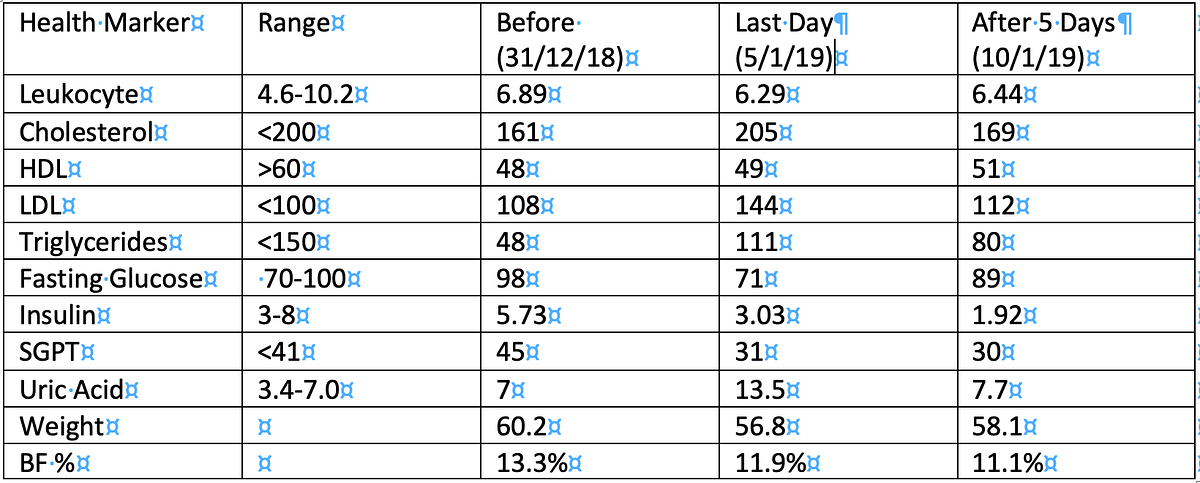
I found the water fast challenging but quite achievable. I am sure regularly fasting since 2015 contributed to it being a more tolerable experience, however having the right mindset certainly helped. What was most fascinating was interpreting the data that I received from the three blood tests: before, on the last day, and five days after completing the fast.
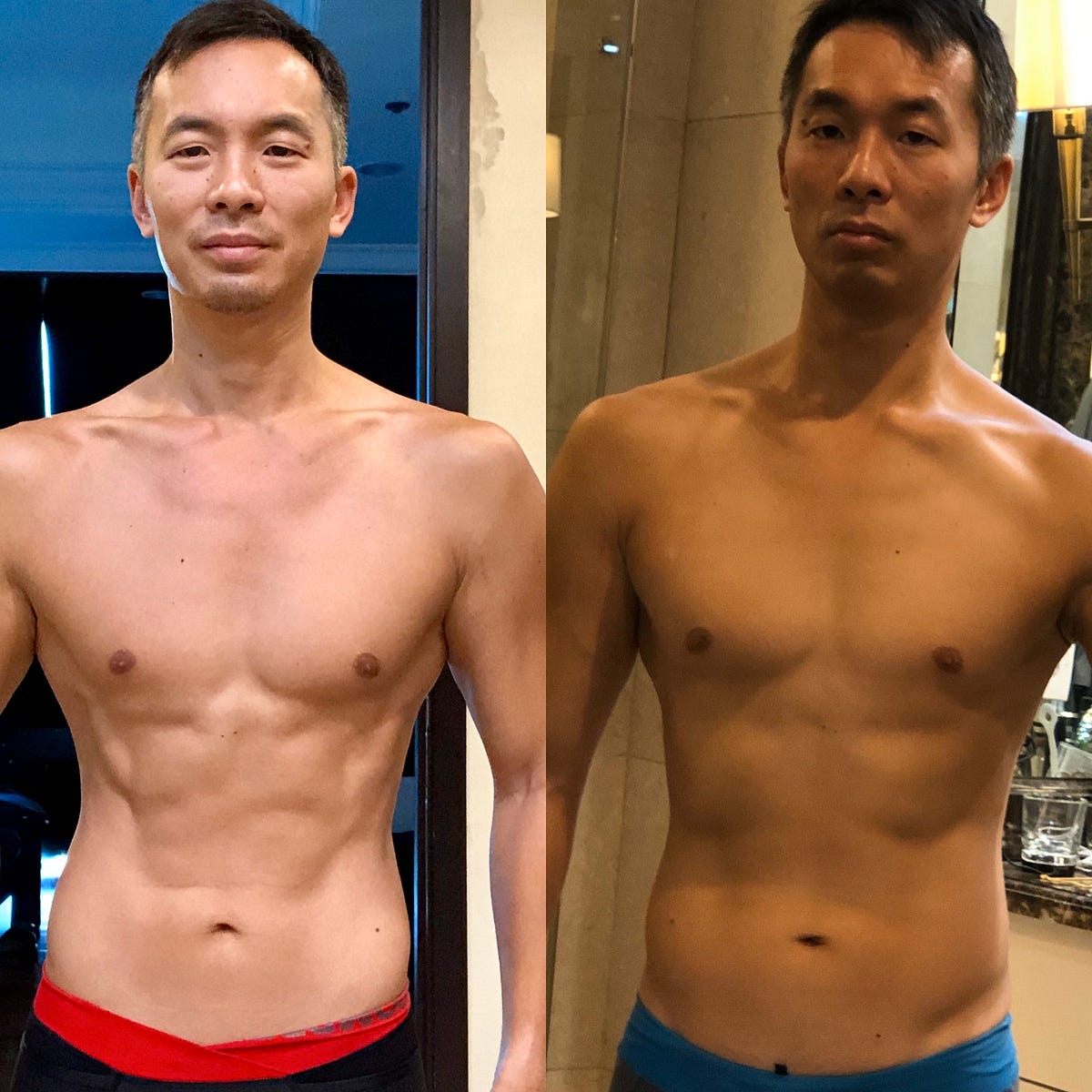
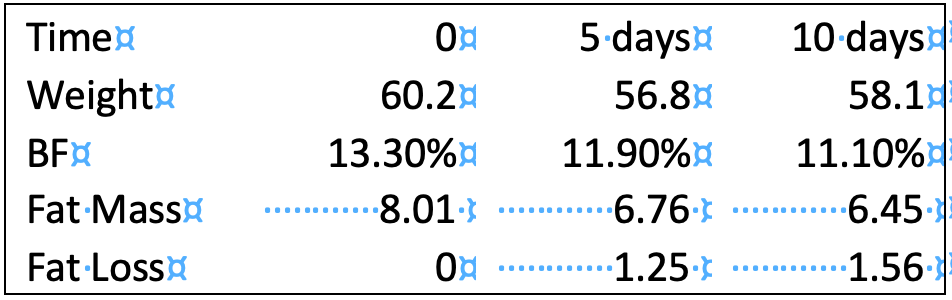
Body weight and fat loss: The obvious benefits came from rapid and sustained weight loss. What is interesting is that out of my 2kg total weight loss I appeared to lose a sustained 1.2-1.5kg of fat. Based on my metrics I would have a basal metabolic rate of around 1,500 calories and probably burn around 2,000 calories over the day with light exercise or walking.
If glycogen stores were fully depleted after 24 hours, that would mean I would need to burn approximately 7,416 calories from fat during the fast. One kilogram of fat is about 7,000 calories, which would suggest about 1.059kg of fat. This looks a little shy of what my calculation shows below. However, if we take into account studies which show that fasting increases BMR by 14%, this could account for the difference almost exactly: 1.059 x 1.14 = 1.21kg over the five days.
I also appeared to continue to burn fat more efficiently even after resuming normal eating, hence more fat loss five days after the fast finished. Granted, this does not control for water percentage, although I did weigh myself at the same time each day.
Blood sugar: I was most interested in this marker because I had previously been cautioned about my high fasting glucose and being close to the pre-diabetic reference range. Here I found quite a dramatic change both in fasting glucose and fasting insulin, which helped confirm my belief that intermittent fasting can have a significant effect on fasting glucose and insulin.

Cardiac health: I was surprised by this one as short-term fasting actually increased both my cholesterol and triglycerides. This may sound contrary to contributing to heart health, however it could be linked to the release of triglycerides for supplying energy. Interestingly, there does not appear to be a lot of research on this area. Having said this, later tests showed my markers going back down to normal levels. Any pointers to research explaining this short-term phenomenon would be appreciated.

Inflammation, liver function and uric acid: I was curious about some other markers which changed significantly during and after the fast. While I do not have a medical background, I conducted some internet research to find explanations. Leukocytes appear to be a marker for inflammation, hence the reduction correlates to one of the benefits of fasting. My understanding is that this is also associated with lower levels of glucose and insulin during a fast.
SGPT is a marker for liver function. Higher values are associated with damage to the liver or potentially an indication of fatty liver. I regularly drink alcohol, on average half a bottle a week or so, which may have contributed to my relatively high reading pre-fast. However, this marker came down during and after the fast.
Lastly, my uric acid count went sky high at the end of the fast. This one took me by surprise given I was not eating anything, but researching online I found that there could be two key contributing reasons. First, autophagy. When the body starts breaking down improperly functioning cells after day two, uric acid is a byproduct of catabolic cell death and this increases levels in the blood. Second, when the body produces ketones, the kidneys appear to process this over uric acid, leading to a buildup of uric acid in the body. While these levels went down five days after the fast and I did not have any gout attack, the side effect of high uric acid when fasting has led me to be concerned about extended-day fasting.

Parting Thoughts
I am convinced that fasting has benefits to my health and overall my blood markers support this. My main concern is around the uric acid buildup, but this appears to have resolved itself within five days after resuming eating. I would like to make this part of an annual routine to help give my body a break from eating, but it would be great to see further published research on how the blood markers change from fasting.
Fasting is a relatively straightforward self-experiment, so if anyone else tries this it would be good to see more data points on how it affects different people's blood markers.